The Rise of the One-Word Verdict
The one-word verdict can end discussion before an idea is understood. Learn to trace how it travels through a conversation and decide when to respond.
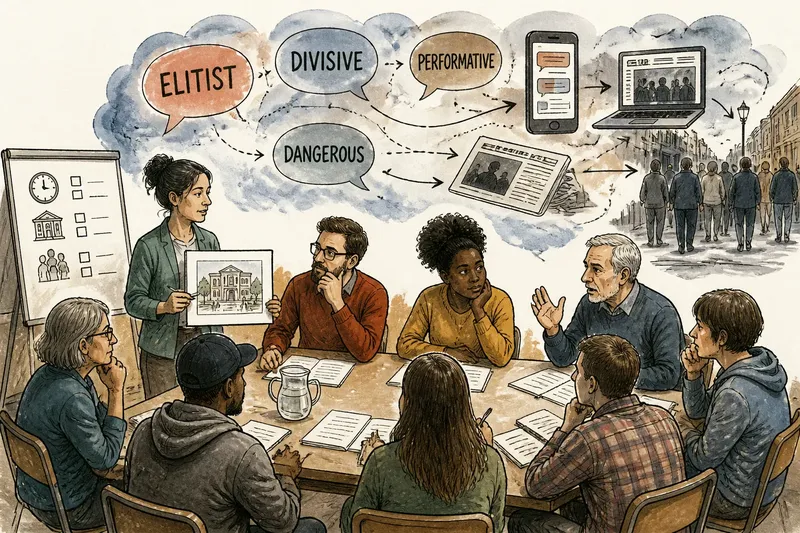
The most common mistake with a one-word verdict is answering it as if it were already a complete argument. A label such as “naive,” “elitist,” or “dangerous” can redirect a discussion toward defending or condemning a person, while the original proposal goes unexamined. The cost is a conversation organized around reactions instead of the choice in front of the group.
A one-word verdict is a compact judgment that presents a conclusion without spelling out its reasoning. It may be accurate, unfair, or partly right; the word alone cannot settle which. Its effects depend on where it appears, who repeats it, and what the group does next.
How verdicts travel
A label can move from a meeting into a message thread, a headline, or a social post. Each retelling may strip away the exchange that gave it meaning. Soon, people may be responding to the label itself rather than the proposal or event that prompted it.
That movement can shape a group’s choices. A chair might set aside a proposal after hearing it called “divisive,” or a reader might dismiss a campaign after seeing it described as “performative.” The label can influence attention and credibility even when nobody has explained what conduct or consequence it refers to.
Not every short judgment deserves an extended reply. Sometimes a group shares enough context to understand the shorthand. The useful question is whether the word is helping people coordinate, or quietly deciding what they are permitted to consider.
Notice the social effect
Listen for what happens after the label is used. Does the speaker point to a specific action, rule, or consequence? Do other people take up the word as a settled description? Does the proposal remain open for discussion, or does the label make further questions seem disloyal or pointless?
These signs do not prove that a label is wrong. They help distinguish a criticism that opens a line of inquiry from one that closes it. “Dangerous,” for example, might alert a group to a concrete risk, but without an explanation it leaves members guessing about what to examine.
Pay attention to who gets to define the terms of the conversation. A prominent speaker may use a label that others repeat, while the people most affected by the proposal have little room to describe their concerns. In that situation, the problem is not merely unclear wording; the group may be treating one voice as the default account.
Follow the decision
Labels matter most when they affect what happens next. A meeting may drop an item from its agenda, a publication may choose not to quote a contributor, or a community group may change a rule. To understand the verdict’s influence, trace the decision it precedes rather than debating the word in isolation.
Say you are in a neighborhood meeting where a proposed evening forum is dismissed as “elitist.” The available facts are that the plan uses a formal venue, the meeting time is difficult for some shift workers, and the organizers have not discussed another way to take part. You ask which feature concerns the speaker; they identify the time, not the venue. The group then considers collecting comments outside the meeting. The label has led to a specific access concern and a possible response, while the proposal’s aim remains open for discussion.
This kind of tracing also shows when a verdict has no practical consequence. If people move on without changing the agenda, the invitation list, or their view of the proposal, a long dispute over the word may not help. If the label is shaping a decision, ask what reason links it to that decision.
Choose a proportionate response
A response can make the reasoning clearer without turning the exchange into a contest over vocabulary. Ask what part of the proposal prompted the judgment, what outcome concerns the speaker, or what decision the group is making on that basis. Then listen for an answer that can be discussed.
- If the label is followed by a specific action or rule, discuss that feature; if it remains unclear, ask which part the speaker means.
- If the speaker names a consequence for a group, ask who is affected; if no group or effect is identified, leave the claim unresolved rather than guessing.
- If a decision is being made on the label, ask what reason connects the criticism to that decision; if no reason is offered, request that the decision be considered on its stated merits.
- If people repeat the label without adding information, bring the conversation back to the proposal; if they can name a new concern, address that concern instead.
- If someone directly affected has not had a chance to speak, make room for their account; if they choose not to speak, do not claim to represent them.
- If the label concerns a brief or incidental comment, let it pass; if it changes who is heard or what options remain, ask for clarification.
The point is not to force a full debate every time someone speaks sharply. It is to match the response to the stakes. In a casual exchange, a simple question may be enough; when a group is about to act, it may need a clearer account of the concern before deciding.
Questions about verdicts?
Is a one-word verdict always unfair?
No. People sometimes use shorthand when everyone present knows the facts and the concern has already been discussed. It becomes limiting when the word is treated as the reason rather than a prompt to state one.
How can I ask without taking sides?
Ask which feature prompted the label or what consequence worries the speaker. That keeps attention on the grounds for the judgment without asking you to defend or reject the proposal.
What if no reason follows?
Say that the label signals concern but does not yet tell you what claim to consider. You can leave the matter open rather than supplying an argument the speaker has not made.
When should I let the label pass?
Let it pass when it has no bearing on a decision, a person’s standing, or the options under discussion. If it changes any of those, a brief request for clarification is more useful than a prolonged argument about wording.
Spend attention wisely
It is not worth the effort to challenge every sharp word. A passing comment can fade without affecting the group, and pursuing it may distract from the issue people need to address. Save your attention for labels that alter who is heard, what is considered, or how a decision is made.
When a one-word verdict does matter, follow its path: notice who uses it, how others take it up, and whether it changes a choice. The phrase “one-word verdict” is useful here not as a diagnosis of the speaker, but as a reminder to ask what the judgment does in the conversation. That question can reveal whether the group needs a clearer reason, a different opportunity to speak, or simply no further debate.