When a New Idea Needs a New Word
Learn when a new word can clarify a public conversation, trace how it travels between communities, and decide whether it helps people coordinate.
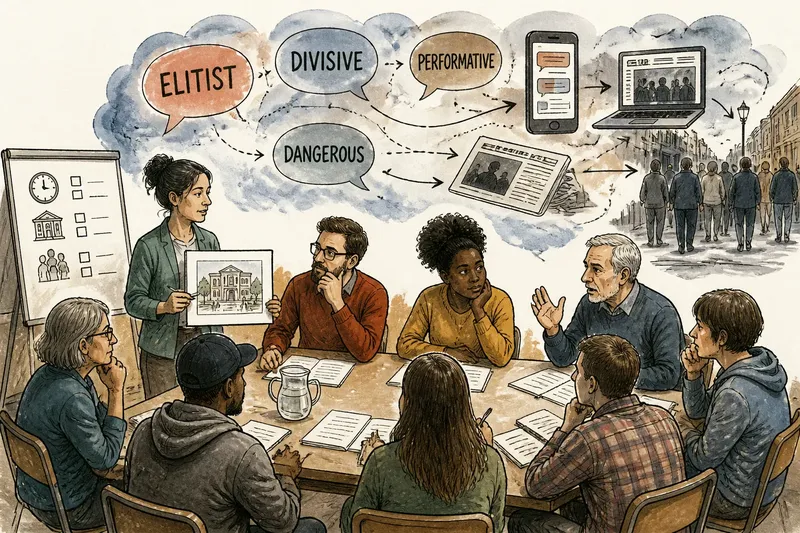
The common mistake is treating a new word as the beginning of a public idea. A label can make a conversation easier to repeat, but it can also turn a local phrase into a slogan before people have worked out what they want to do together. To judge whether a new idea needs a new word, look at how a phrase helps people coordinate across settings—not just whether it sounds memorable.
Track a phrase’s path
Words gain public meaning through use. A phrase may begin in a neighborhood meeting, travel through a newsletter or local radio segment, and later appear in a campaign’s materials. Each setting can change who says it, who recognizes it, and what action it invites.
Keep a simple record of where the phrase appears and what it does there. Note whether people use it to name a concern, invite others into a conversation, request a change, or signal membership in a group. This is a record of its social work, not a count of how often it appears.
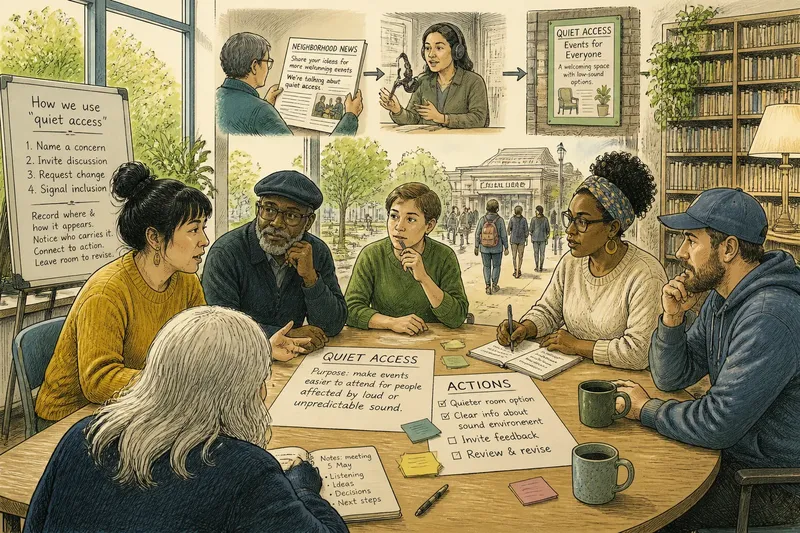
Say a library group begins using “quiet access” in conversations about making events welcoming to people who need less noise. If a neighborhood newsletter repeats the phrase while inviting residents to suggest event changes, it is serving as an invitation. If a venue later uses it only as a promotional slogan, the phrase has traveled, but its practical meaning may have thinned.
Notice who carries it
A phrase does not travel by itself. Organizers, local journalists, artists, educators, and community members may carry it between spaces, sometimes with different purposes. Ask who has the authority to explain the phrase in each setting and whose account is being left out.
Pay attention to changes in ownership. A phrase coined in a community may be repeated by an institution that has more access to public platforms. That repetition can bring attention to an issue, but it can also separate the words from the people who gave them meaning. Credit, consultation, and room for correction help keep that shift visible.
Not every use needs a formal campaign around it. It is not worth the effort to police every casual mention or insist that a phrase keep one frozen meaning. Focus instead on uses that affect decisions, public representation, or the people whose experiences the phrase invokes.
Connect words to action
A public idea becomes easier to understand when people can see what it asks them to notice or change. Look for the concrete actions attached to a phrase: a meeting agenda, a revised event invitation, a request to a local agency, or a new way of welcoming participants.
Imagine a library group using “quiet access” at a planning meeting. Members write down the phrase’s intended purpose: make events easier to attend for people affected by loud or unpredictable sound. They then review an event invitation and propose a quieter room and a clear note about the sound environment. The resulting invitation tells readers what to expect and gives them a practical choice; the phrase has helped guide a decision rather than merely decorate it.
That kind of connection also makes disagreement more useful. Someone may support the aim but question a proposed change. If the group can point to the action and explain its purpose, members can discuss alternatives without turning the phrase into a loyalty test.
Watch public meaning?
How does a phrase become a public idea?
It becomes public as people use it to connect conversations, explain a concern, or coordinate an action across settings. Repetition alone is not enough; the phrase needs a recognizable purpose in the situations where it appears.
What changes when a phrase travels?
Its audience, speaker, and practical meaning can all shift. Comparing uses across a meeting, a newsletter, and an institutional statement can show whether the phrase still points toward the same concern.
How can a group keep a phrase useful?
Explain what the phrase is intended to do, keep the people most affected involved in decisions about its use, and connect it to visible actions. Leave room for correction when a use misses the intended meaning.
When should people stop using a phrase?
Consider replacing or revising it when it repeatedly obscures the issue, becomes a substitute for action, or causes avoidable harm to the people it refers to. A group can retain the underlying aim while choosing clearer words.
Keep room to revise
Public language changes as it moves between people and institutions. A phrase that once helped a group explain an idea may later become too vague, or a more useful expression may emerge from the people doing the work. Keep the original purpose and the decisions attached to the phrase easy to find.
When a new phrase appears, ask what it lets people do that familiar language did not. If the answer is only that it sounds fresh, an existing expression may serve better. If it helps people recognize an overlooked concern, invite participation, or make a shared decision clearer, keep listening for how people use it—and make room to change the wording when its public meaning shifts.